Life After Disturbance
All primary forests evolve with natural disturbances like fire, outbreaking insects, and other events that kill trees. In fact, natural disturbances create niches for many life forms and are therefore essential for the maintenance of biodiversity.
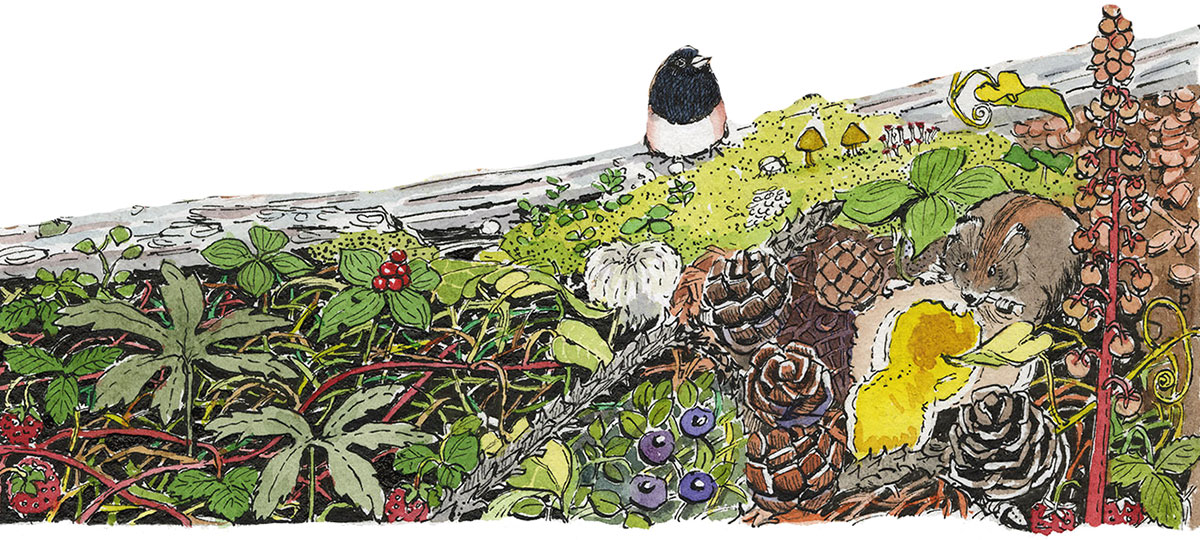
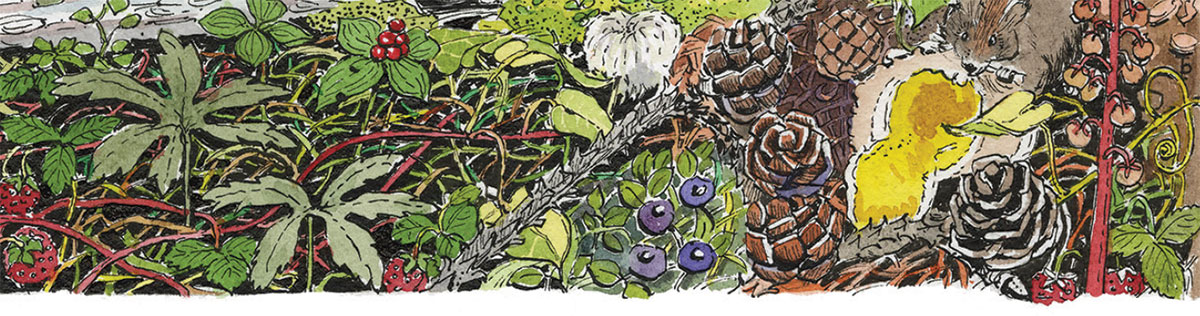
The Life after Disturbance series highlights the importance of natural cycles of death and life in primary forests, and cultivates an appreciation for their beauty and ecological value. This series of illustrations showcases landscapes in the wake of four common natural disturbances in Interior BC – fire, spruce beetle, looper moth, and pine beetle. This project documents the rich ecological stories of the diversity of life that thrive in post-disturbance
landscapes.
Looper Moth
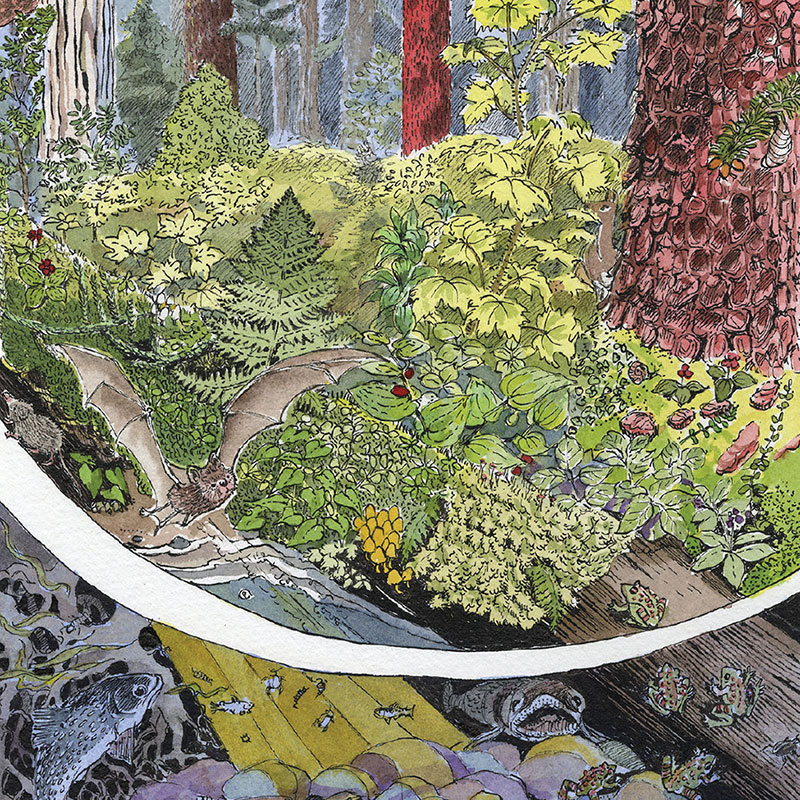
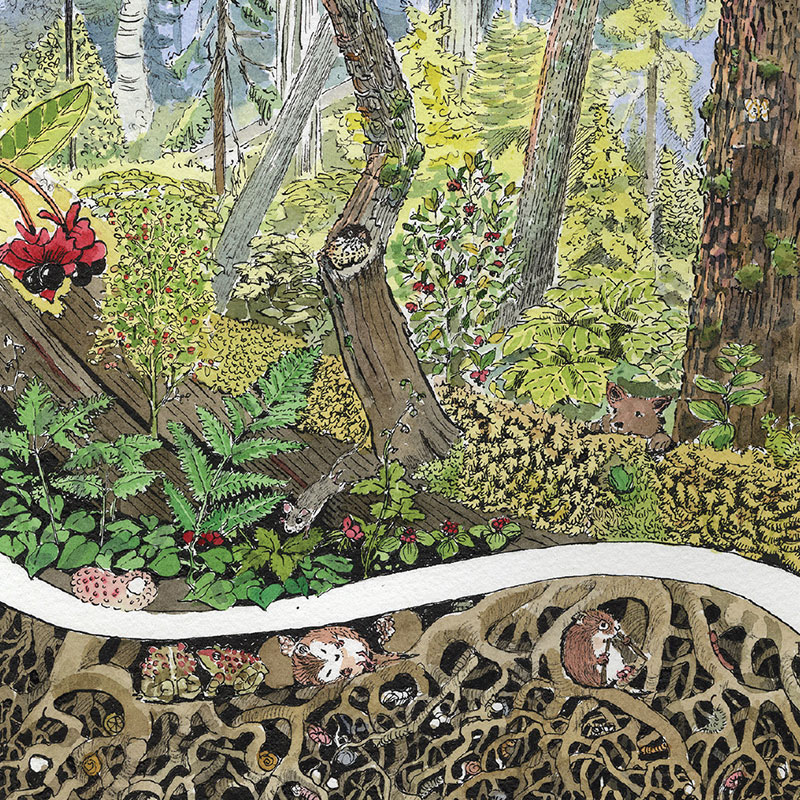
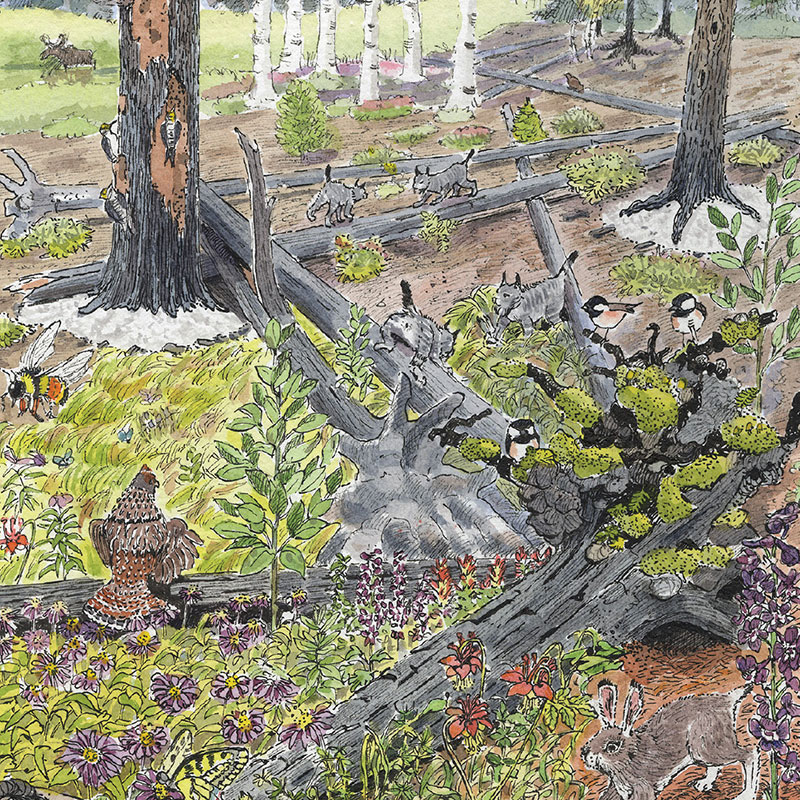
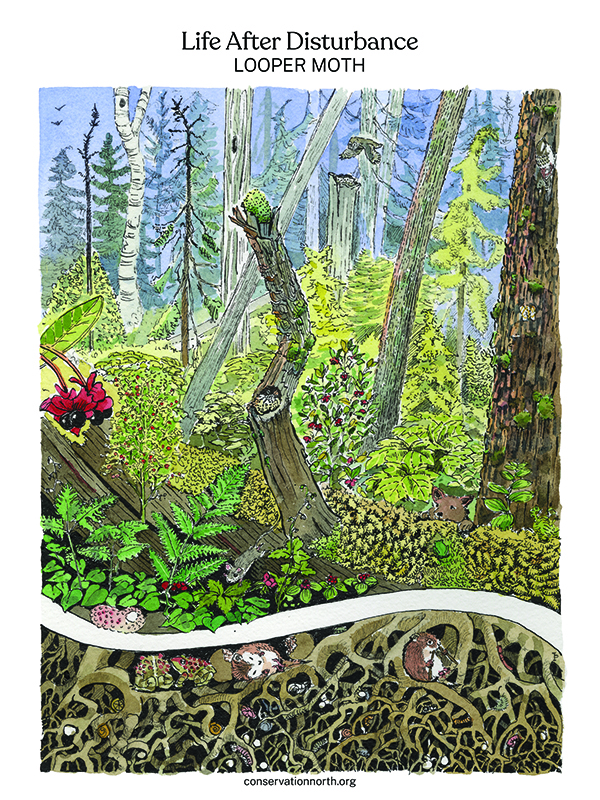
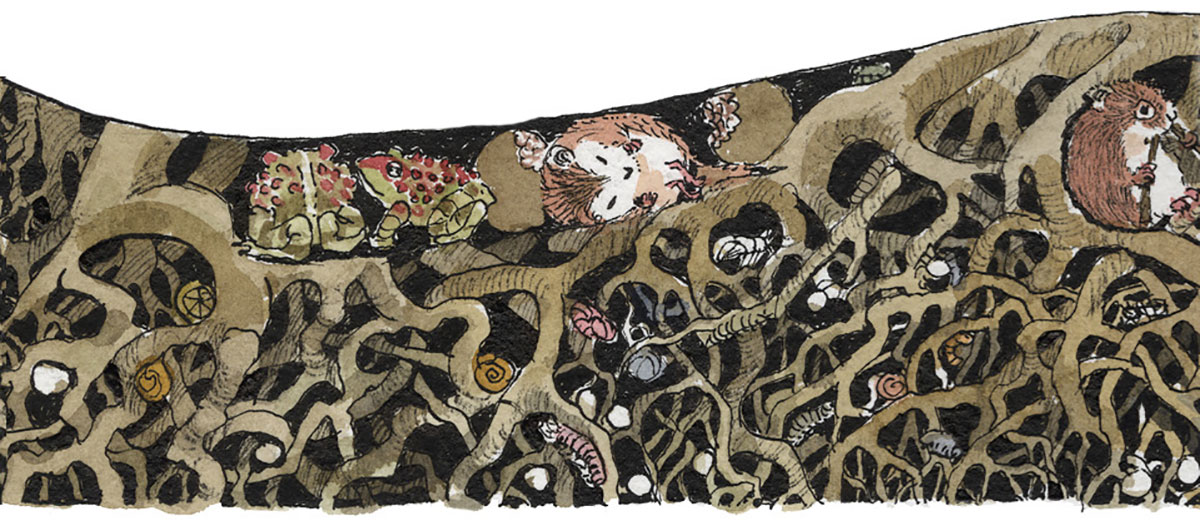
Western hemlock looper moths, Lambdina fiscellaria lugubrosa, are mottled brown and white. Adults lay their eggs in the tops of hemlock trees. Their larvae hatch in the spring and feed voraciously on both needles and leaves of most trees and even some shrubs. While these rainforests rebound quickly, the explosion of understory vegetation and wildlife trees left behind support entire food webs of birds, bears, and ungulates.
This illustration was drawn from real life in the northern Inland Temperate Rainforest near the Goat River twenty years after a looper moth event.
Pine Beetle
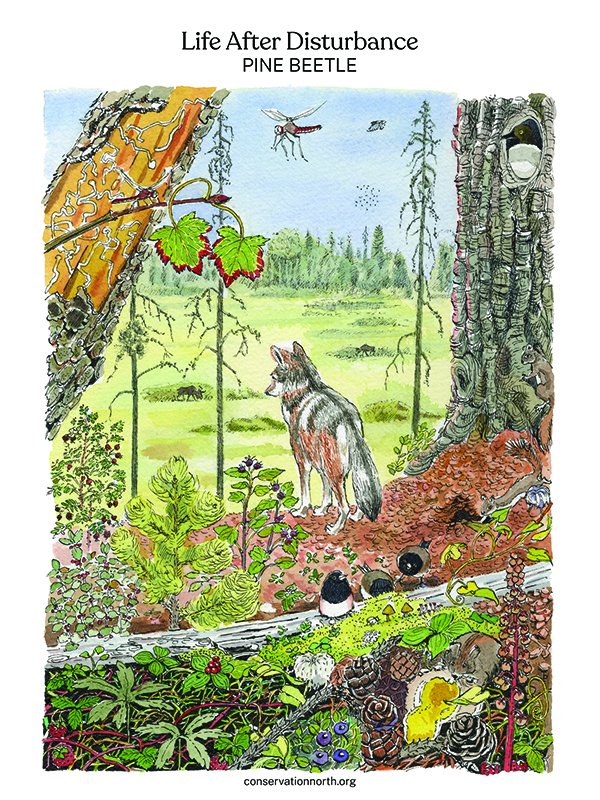
Pine bark beetles, Dendroctonus ponderosae, are small and black and only live one year. Adults bore into mature pine trees and lay their eggs in the soft inner bark, where their larvae feed on sugars being transported from leaves to roots. Pine beetles increase forest complexity, thereby supporting native biodiversity.
This illustration was drawn from real life near Eskers Provincial Park nearly two decades after a pine beetle event.
Spruce Beetle
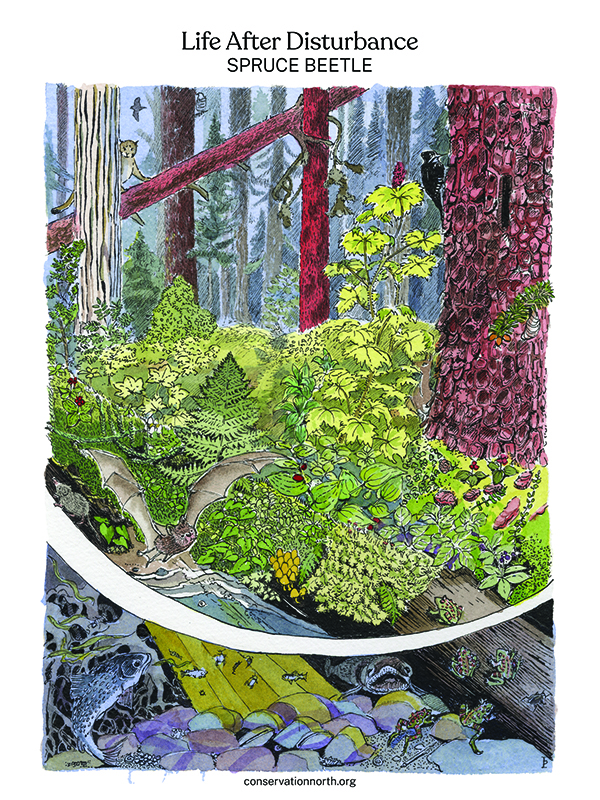
Spruce bark beetles, Dendroctonus rufipennis, are tiny and dark brown with reddish wing covers that live up to 3 years. The adults lay their eggs in the soft inner bark of large, old spruce trees. This beetle species is the most important driver of tree death, nutrient cycling, and habitat complexity in many snow dominated ecosystems.
This illustration was drawn from real life in Carp Lake Provincial Park seven years after a spruce beetle event.
Fire
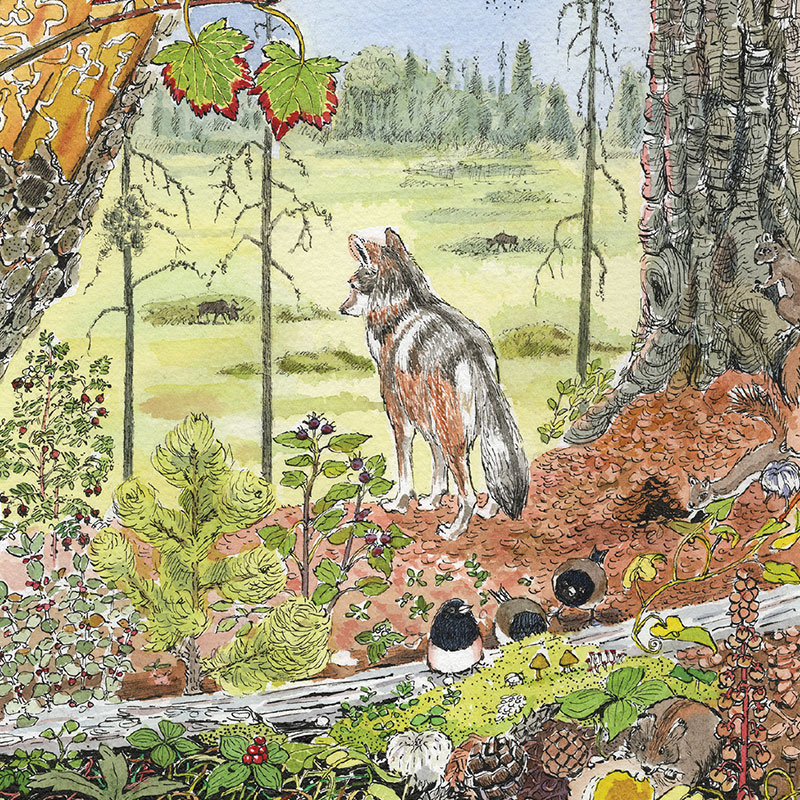
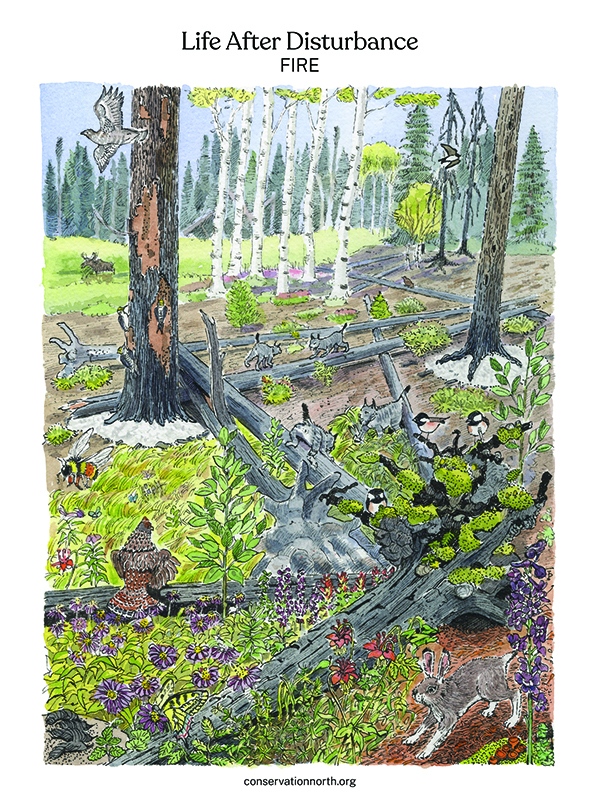
This illustration is drawn from real life at Finger Tatuk Lakes Provincial Park a year after a lightning fire. Fires occur frequently in this ecosystem, creating a mosaic of forest ages across the landscape supporting a wide diversity of habitat types. Climate change and industrial logging impede this essential cycle.
Protect Critical Natural Habitats
Proceeds from this artwork will support our public education, field work and research.
Together we can conserve these vital ecosystems.
British Columbia’s Primary Forests
Forests that have never been degraded through industrial logging are known as primary forests. In primary forests, complex ecological features and processes have developed over time to support an array of species and habitats.
In wet coastal landscapes (like BC’s coastal and interior rainforest), trees in primary forests can grow very old. These landscapes are often known as ‘old-growth.’
Since interior areas of the province tend to be drier, they experience more frequent cycles of natural disturbance such as fire. Not all trees die after a natural disturbance – some trees are resistant to fire and insect outbreaks. With openings in the canopy, patches of light reach the forest floor, which becomes a garden of berry bushes, flowering shrubs, and young trees. Even in the early stages of regeneration these forests contain a diversity of species and ages. The ecosystems themselves are still very old.
The ecological diversity of primary forests does not exist in landscapes that have been industrially logged and restocked as tree plantations.
What is ‘Salvage’ Logging?
Industrial logging after natural disturbances such as insect outbreaks and wildfire has become common practice. The forest industry calls this ‘salvage’ logging and it often occurs in primary forests, targeting some of the most vulnerable habitats remaining in British Columbia.
The claim is that this logging practice makes use of (or ‘salvages’) dead and damaged wood from these post-disturbance landscapes, while at the same time preventing the risk of further disturbance. This claim does not take into consideration that post-disturbance landscapes are not damaged, dysfunctional or in need of intervention.
New BC regulations as of April 2024 further incentivize ‘salvage’ logging through increased flexibility, lower pricing and decreased regulations.
Is salvage logging good for nature, communities and the climate? Learn more by listening to the recorded webinar.
About the Artists
The Life after Disturbance Series was created by Conservation North and the Hummingbird Collective to teach people about the ecological importance of natural disturbances.
Learn about the artists
hummingbirdcollective.net
Stickers
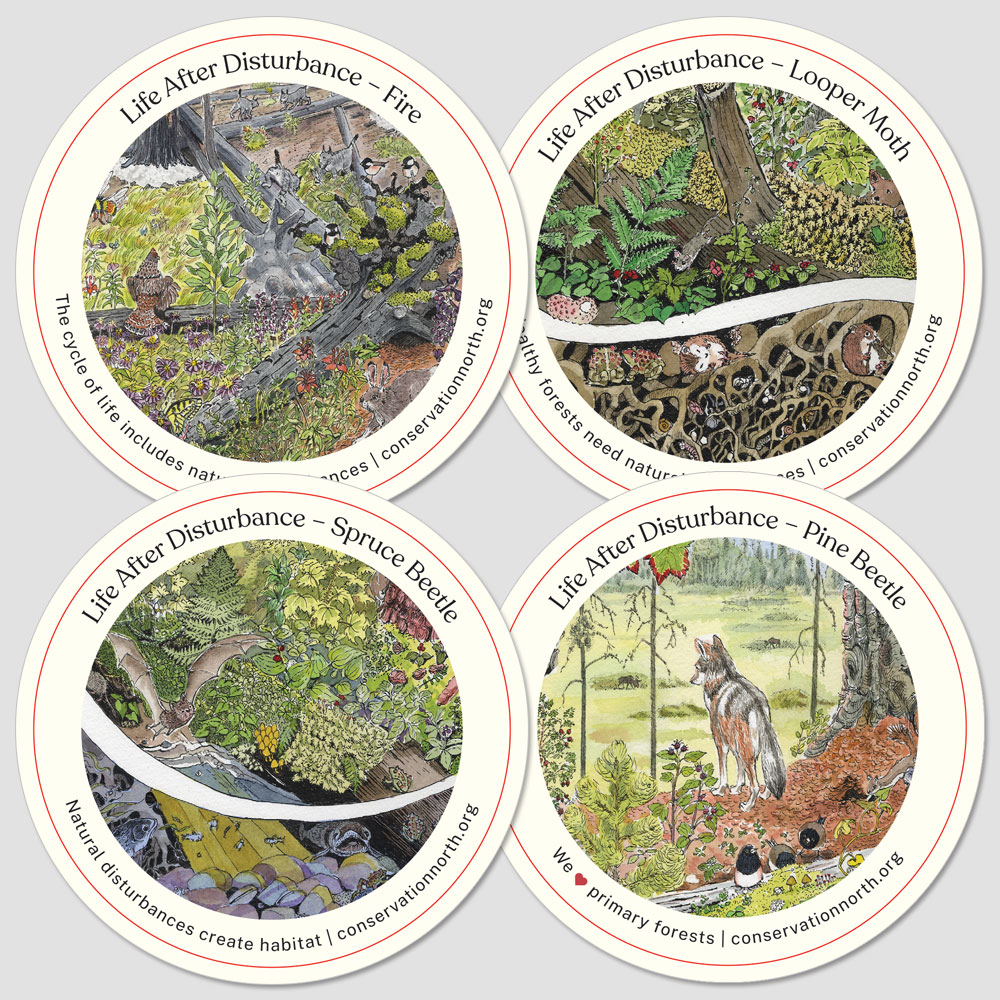
3″ Stickers are available for the four disturbances. They are sold as a set of 4 stickers only. They make a great gift for friends, family and coworkers.
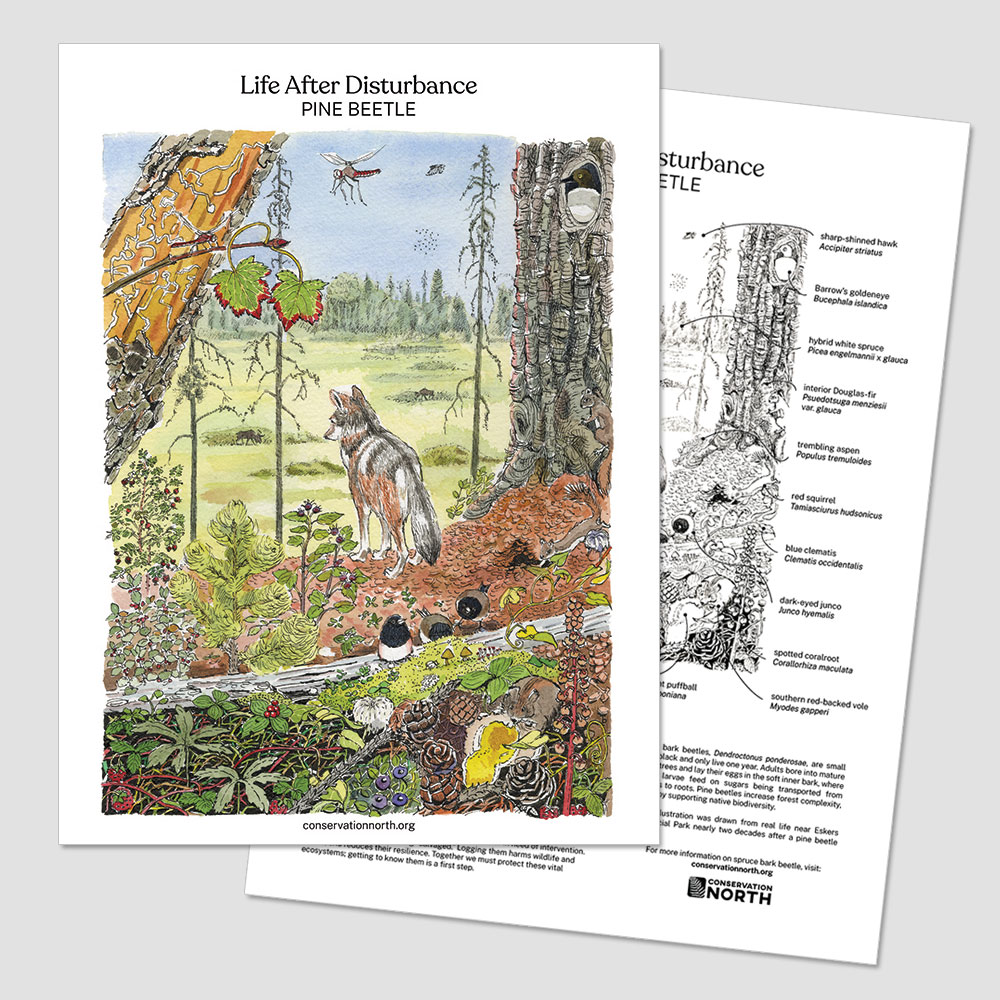
Posters
These 18″ x 24″ posters are a beautiful addition to the home, office or classroom. These two-sided posters will help you discover the wonderful diversity of Life after Disturbance. Use the back of the poster to identify species and colour your own! Available individually or as a set.
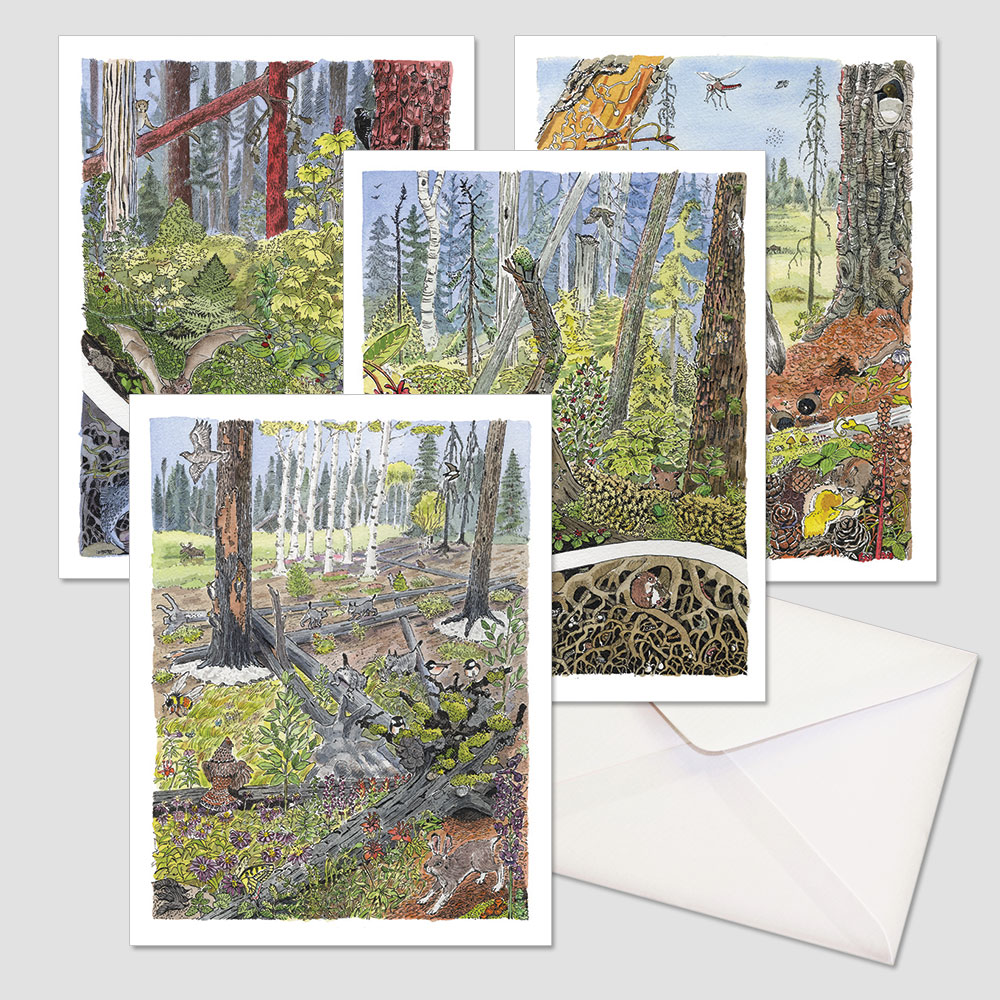
Greeting Cards
5″ x 7″ greeting cards with a blank inside and envelope. Sold as a set. Information about Life After Disturbance is on the back of each card. Share the message with friends, coworkers, loved ones and more.
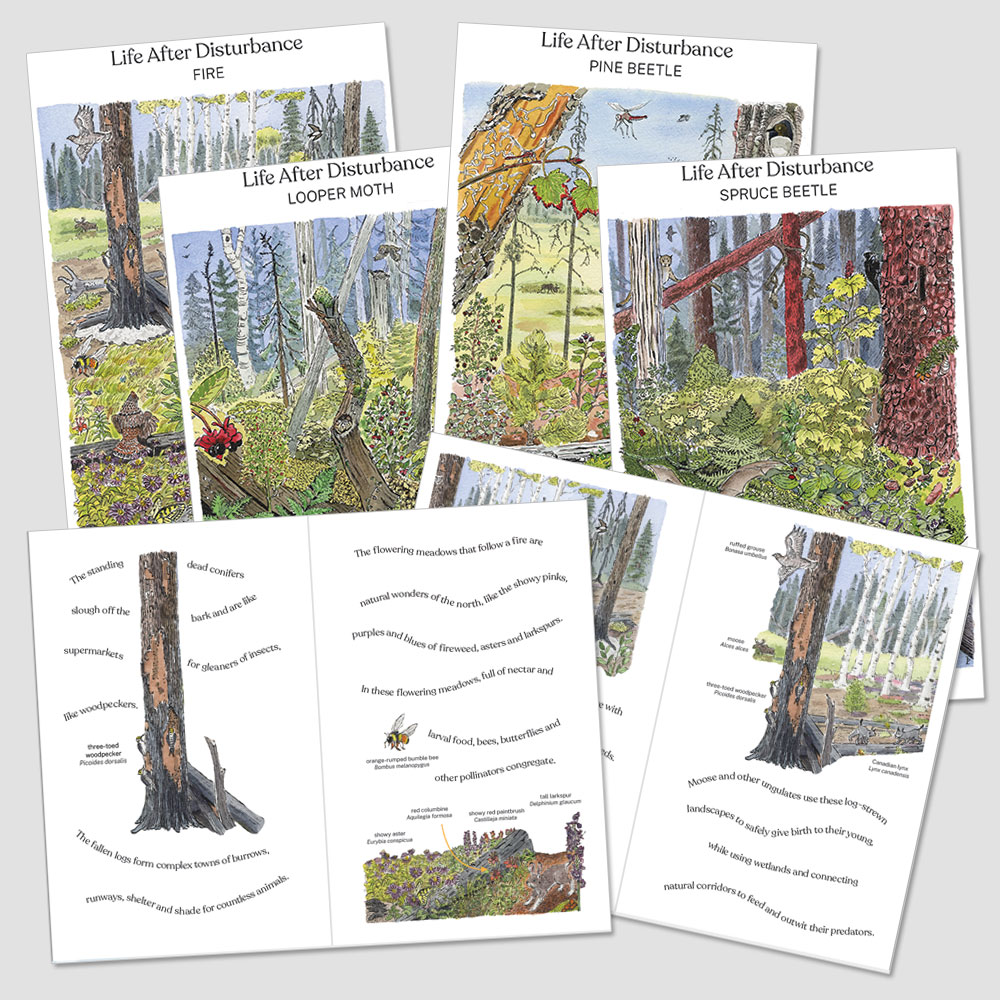
Booklets
The Life after Disturbance booklets are a delightful way to learn about the dynamic stories of species that thrive in each post-disturbance landscape. Enjoyed by youth and adults alike, these booklets are wonderful at home or in the classroom. Sold as set of 4.