Forest Ecology Webinars
Gaming the Ecosystem
Have you ever wondered what “salvage” logging is, and how it affects communities, ecosystems and the climate?
We hosted a webinar on July 15th, 2024 to answer these questions. The session featured Seraphine Munroe (Maiyoo Keyoh Society), Dr. Karen Price (independent ecologist), Dr. Phil Burton (emeritus University of Northern BC professor), Dr. Diana Six (University of Montana) and Dr. Dominick DellaSala (Wild Heritage).
Webinar Video
Gaming the ecosystem: the truth about salvage logging
This event was co-sponsored by the Interior Watershed Task Force, the Fraser Headwaters Alliance and Wildsight.
You can view the webinar video by clicking on the arrow or you can watch on youtube via this link.
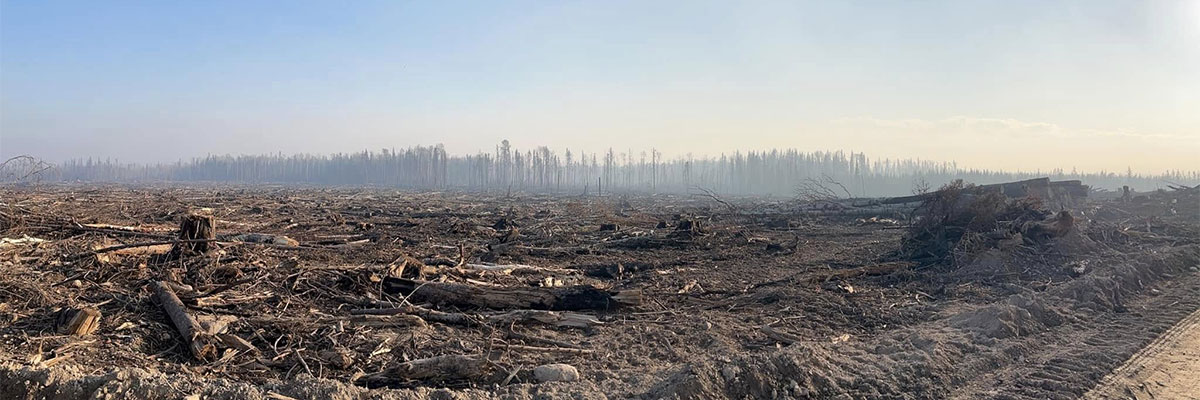
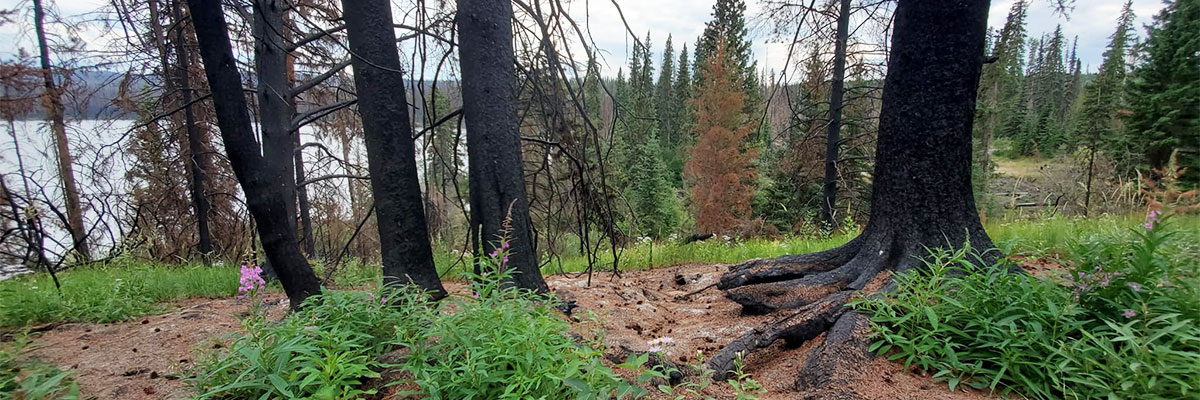
The phrase “salvage” logging suggests that by logging, we are saving something that has been destroyed; however, all primary forests in BC evolved with natural disturbances like fire, insects and disease. These events do not destroy a forest. In fact, burned primary forests retain much of their structure and biodiversity, and dead trees provide habitat niches that are so important that some biologists argue that for some wildlife species, the value of a tree begins when it dies. Logging burned forests does not “restore areas for wildlife”, as claimed by logging industry spokespeople.
In 2024 the BC government introduced a program to expedite logging in primary forests that have had a recent wildfire.
Active Management
Active management’ is a term applied to practices such as mechanical thinning, commercial logging and other extractive activities in forests.
The term’s use has accelerated as forest managers around the world realize they can use natural disturbances like fire and beetle outbreaks as a pretext to log more primary forests. This webinar, held on September 23, 2025 featured Dr. David Lindenmayer (Australian National University), Dr. Dominick DellaSala (Conservation Biology Institute), Herb Hammond (retired Registered Professional Forester). To quote Dr. Lindenmayer in a recent article, “active management activities have scaled up in response to economic drivers, misinformation on natural disturbance processes, and more climate-driven extreme events that trigger large and fast-moving fires.
Webinar Video
Logging’s Final Frontier? How ‘active management’ imperils forest resilience.
See information about the speakers below.
You can view the webinar video by clicking on the arrow or you can watch on youtube via this link.
Speaker bios:
Dr. David Lindenmeyer is a world-renowned Australian Professor of Ecology and Conservation Biology at the Australian National University’s Fenner School of Environment and Society, known for his long-term research programs on forest ecology, wildlife conservation, and sustainable natural resource management. He is one of the world’s most prolific and highly cited scientists, with numerous awards and fellowships, including an Officer of the Order of Australia (AO). His work focuses on topics such as the impacts of logging, forest fragmentation, fire ecology, and the conservation of biodiversity in various forest types and agricultural landscapes.
Dr. Dominick DellaSala is the former Chief Scientist at Wild Heritage, and former President of the Society for Conservation Biology, North America Section. He is an internationally renowned author of >300 peer-reviewed papers and 9 award-winning books including Temperate and Boreal Rainforests of the World: Ecology and Conservation; Mixed-Severity Fire: Nature’s Phoenix; and Conservation Science & Advocacy for a Planet in Peril: Speaking Truth to Power. Dominick has appeared in National Geographic, Scientific American, Time Magazine, the New York Times and others. He has served on the White House Council task forces on forests and Oregon’s Global Warming Commission carbon task force.
Herb Hammond is a BC-based forest ecologist and retired Registered Professional Forester with more than 45 years of experience in research, industry, teaching and consulting. He is the author of Seeing the Forest Among the Trees: The Case for Wholistic Forest Use (Polestar Press) and Maintaining Whole Systems on Earth’s Crown: Ecosystem-based Conservation Planning for the Boreal Forest (Silva Forest Foundation).